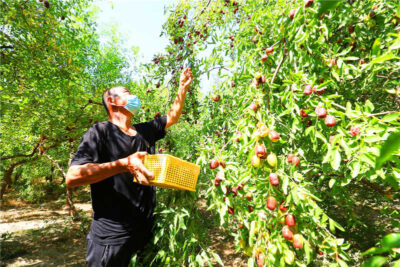
Blog
Jujube vs Dates: 5 Essential Differences Every Food Brand Should Know

Jujube vs dates — what’s the real difference?
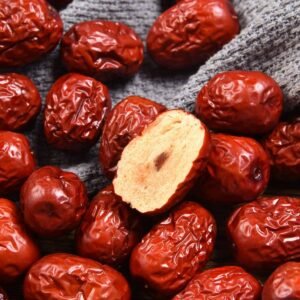
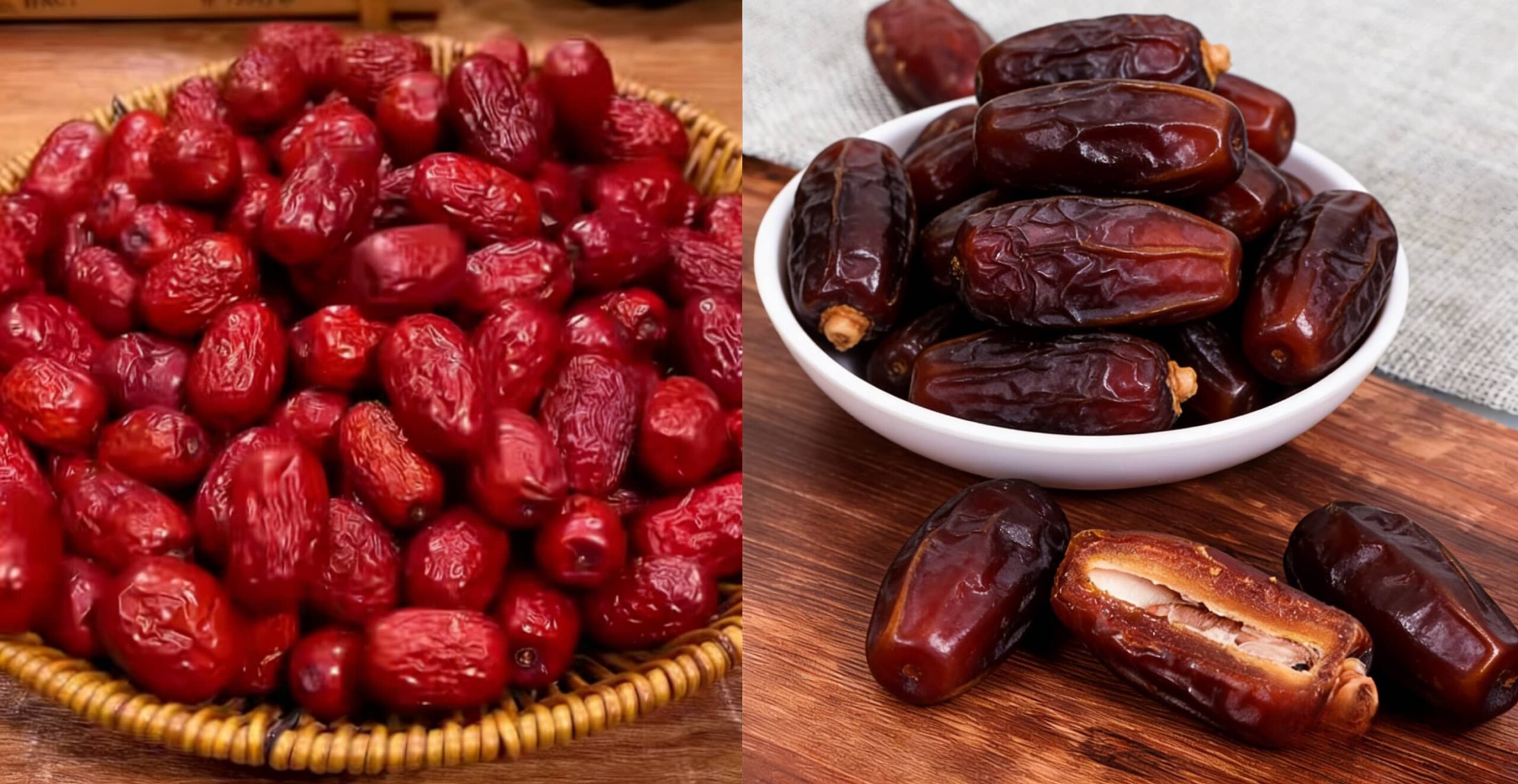
For many international buyers and food brands, the terms “jujube” and “dates” are often confused. Although they may look similar when dried, Chinese jujube (red dates) and palm dates are completely different fruits with distinct nutritional profiles, taste characteristics, and food manufacturing applications.
Understanding the jujube vs dates difference is essential for brands developing healthy snacks, functional beverages, or premium gift products in growing markets such as Vietnam, Malaysia, Singapore, and Taiwan.
Introduction: Why the Distinction Matters for Your Brand
In the global healthy snack market, clarity is the first step toward a successful product. For many international buyers—especially those in expanding markets like Vietnam, Malaysia, and Singapore—the terms “Jujube” and “Date” are often used interchangeably. However, they are entirely different botanical species with distinct nutritional profiles and functional properties.
At JUJUBILI by ZAORAN, we believe that “Built on Jujubes” means more than just supplying raw materials; it means empowering brands with the right knowledge. Whether you are developing a new energy bar, a functional tea, or a premium gift box, choosing between the Chinese Jujube and the Middle Eastern Palm Date will define your product’s DNA.Jujube vs dates is a common confusion for international buyers.When comparing jujube vs dates, nutrition differences become clear.
1. Jujube vs Dates: Botanical Origins
While they share a similar name and a wrinkled appearance when dried, their origins couldn’t be further apart.
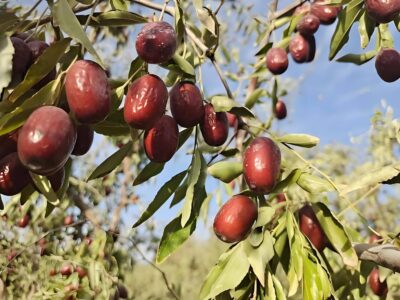
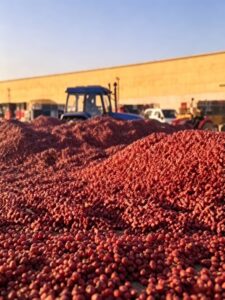
Chinese Jujube (Ziziphus jujuba): Native to China and celebrated for over 4,000 years. It belongs to the buckthorn family. As a source-factory based in Henan, China, ZAORAN leverages deep-rooted sourcing capabilities to provide the finest varieties like the “Xinzheng Grey Jujube” or “Junjuba.”
Palm Dates (Phoenix dactylifera): These grow on palm trees and are native to the Middle East and North Africa (e.g., Medjool or Deglet Noor).
Pro Tip for Brands: If your target market values Traditional Chinese Medicine (TCM) heritage or “superfood” labels, the Chinese Jujube is your go-to ingredient.
2. Jujube vs Dates: Nutritional Comparison
From a formulation perspective, the nutritional variance is the most significant “decision-making cost” for R&D teams.
| Feature | Chinese Jujube (Red Date) | Palm Dates (Medjool) |
| Vitamin C | Extremely High (Immune Support) | Low |
| Sugar Content | Moderate (Complex Carbs) | Very High (Quick Energy) |
| Caloric Density | Lower per gram | Higher per gram |
| Key Benefit | Blood health & Stress relief | Potassium & Rapid recovery |
Why it matters for ODM/OEM: If you are creating a “Healthy Aging” or “Women’s Wellness” snack line for the Taiwan or Singapore markets, the Jujube’s high antioxidant and iron-promoting properties offer a more compelling marketing story than the high-sugar palm date.
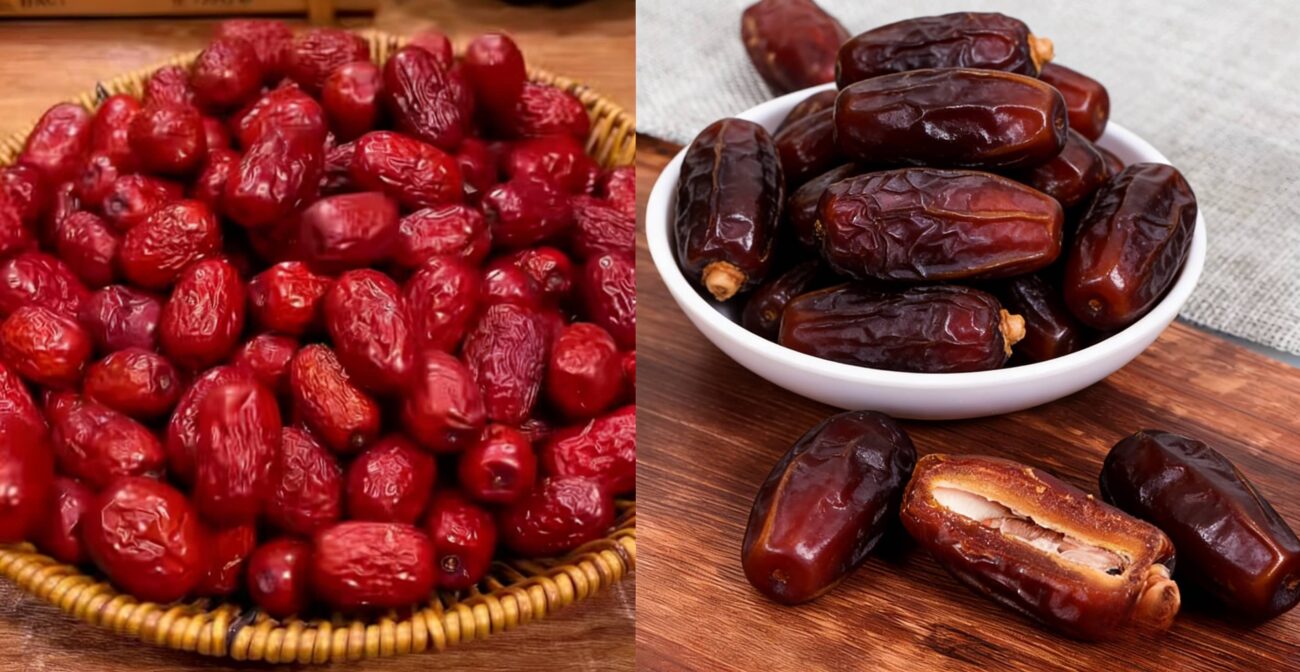
3.Jujube vs Dates: Taste, Texture and Food Processing
How will your final product feel in the consumer’s mouth?
- Jujube Texture: Naturally spongy and light. When dried, it has a “bread-like” interior. It absorbs liquids beautifully, making it perfect for soups, teas, and infused snacks.
- Palm Date Texture: Dense, sticky, and syrupy. It acts as a natural binder in “raw” energy balls.
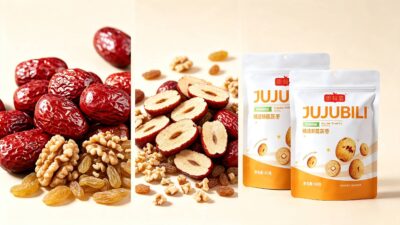
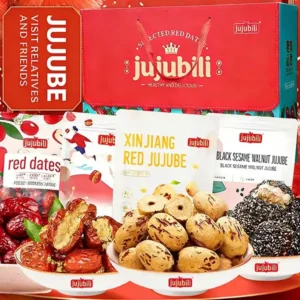
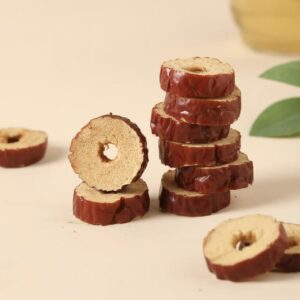
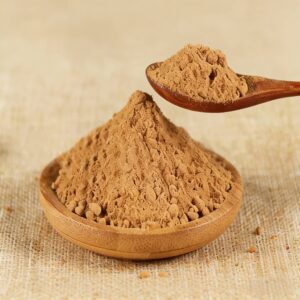
JUJUBILI Solution: We specialize in Deep Processing. We can transform jujubes into crispy slices, pits-removed halves for walnut-stuffing, or fine powders. Our “Jujube + Walnut” combinations are currently a top-performing ODM solution for the healthy snacking sector in Southeast Asia.
4. Market Strategic Value: The “Asian Superfood” Trend
For brands in Malaysia and Vietnam, the Chinese Jujube carries a “premium health” halo. It is perceived as a functional food rather than just a candy.
JUJUBILI by ZAORAN doesn’t just sell dried fruit; we provide ODM/OEM Snack Solutions. We understand that a brand in Singapore might want a “Low-GI” claim, while a brand in Vietnam might prioritize “Immune Boosting.” Our deep-地头 (on-the-ground) procurement ensures that the raw material—the Jujube—is of the highest grade to support these claims.For product development, the jujube vs dates choice can influence taste, sugar level, and marketing claims.
5. Built on Jujubes. Built for Brands: The JUJUBILI Advantage
Choosing a supplier is about reducing risk. Why do global brands choose JUJUBILI by ZAORAN?
- Direct from Source: Our own factories in Henan (the heart of Jujube cultivation) eliminate the middleman, ensuring price stability and traceability.
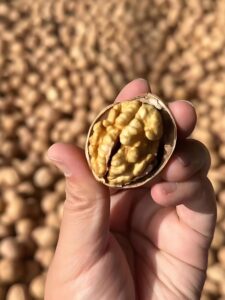
- Integrated Ingredient Mix: Beyond jujubes, we integrate walnuts and raisins. This allows us to create complex, multi-textured snacks (like jujube-wrapped walnuts) in a single production line.
- Tailored for Asia: We understand the regulatory and taste preferences of the Asian market. Our solutions are designed to be “Gift-ready” or “Grab-and-go” healthy snacks.
- Full-Service ODM/OEM: From raw material selection to final packaging design, we lower your entry barrier into the healthy dry fruit category.
Conclusion: Jujube vs Dates — Which Is Better for Your Brand?
If you need a high-sugar binder for a vegan brownie, go with palm dates. But if you want to build a brand around wellness, functional nutrition, and the “Asian Superfood” movement, the Chinese Jujube is your ultimate foundation.
At JUJUBILI, our slogan is our promise: Built on Jujubes. Built for Brands. We are ready to be your strategic partner in developing the next generation of healthy snacks.
Ready to innovate? Visit jujubili.com to explore our ingredient catalog or contact our team for a customized ODM/OEM proposal. Let’s build your brand together.
According to USDA FoodData Central, palm dates contain significantly higher natural sugar compared with Chinese jujubes.