Blog
185 Thin-Skin Walnuts vs Xin 2: The Complete B2B Sourcing Guide

Table of Contents
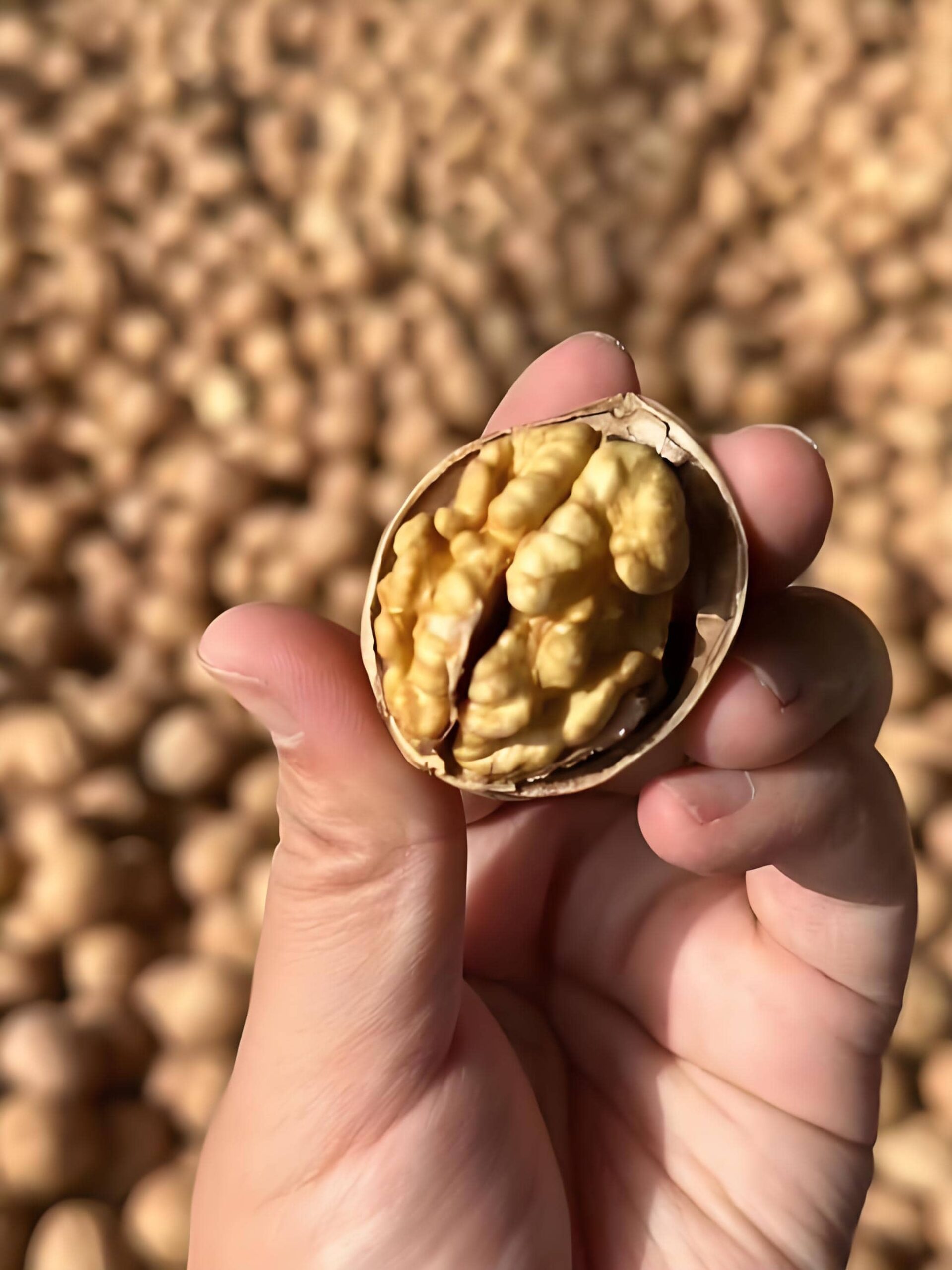
185 thin-skin walnuts are one of the most popular premium walnut varieties exported from Xinjiang.When sourcing premium walnuts from China, international B2B buyers often encounter two flagship cultivars from the Aksu and Hotan regions of Xinjiang: 185 (Paper-Skin Walnut / 纸皮核桃) and Xin 2 (新2号).
While both varieties represent the gold standard of Chinese nut production, choosing between them dictates your product’s processing line efficiency, end-product yields, packaging costs, and target market positioning.
As a specialized supplier of OEM/ODM dried fruit and nut solutions, JUJUBILI by ZAORAN provides a comprehensive breakdown of 185 thin-skin walnuts and Xin 2 walnuts, helping international buyers make data-driven sourcing decisions.
Why International Buyers Choose 185 Thin-Skin Walnuts
185 thin-skin walnuts have become a preferred choice for premium nut brands because of their ultra-thin shell, high kernel recovery rate, and attractive appearance.
Technical Comparison Matrix: 185 vs. Xin 2
To evaluate these two cultivars accurately, buyers must look beyond sensory traits and analyze standardized physical properties, including shell thickness, kernel yield, and extraction integrity.
| Specification / Metric | 185 Walnut (纸皮核桃 / Paper-Skin) | Xin 2 Walnut (新2号) |
| Primary Cultivation Zone | Aksu Region, Xinjiang (70°E–80°E, 40°N) | Aksu & Kashgar Regions, Xinjiang |
| Shell Thickness (mm) | 0.6 mm – 0.8 mm (Ultra-thin) | 1.0 mm – 1.2 mm (Medium-thin) |
| Cracking Method | Hand-crackable (Squeeze by hand) | Light mechanical or hand-tool crackable |
| Average Kernel Yield (%) | 65% – 68% | 52% – 55% |
| Whole Kernel Ratio | > 85% (Half-kernel extraction) | > 75% |
| Kernel Color Profile | Light / Extra Light (EFSA/USDA Standards) | Amber to Light Amber |
| Oil Content (%) | ~63% – 65% | ~67% – 69% |
| Flavor Profile | Creamy, sweet, zero astringency | Rich, nutty, slight natural astringency |
| Best For | Premium retail snacks, direct consumer packaging | Food processing, bakery, oil extraction |
Deep-Dive Analysis: Cultivar Characteristics
1. 185 Thin-Skin Walnuts (纸皮核桃): The Retail Gold Standard
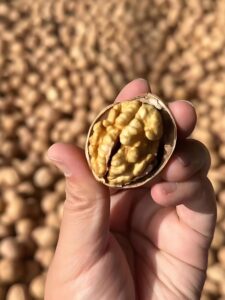
The 185 variety is globally recognized for its exceptionally thin shell structure, measuring an average of 0.6 mm to 0.8 mm. This physical attribute allows consumers to open the shell effortlessly using only hand pressure, eliminating the need for mechanical nutcrackers.
Key Advantages for B2B Importers:
- Industry-Leading Kernel Yield: Delivering a kernel extraction yield percentage of 65% to 68%, the 185 variety yields significantly higher edible nut meat per metric ton of in-shell fruit compared to standard global varieties (such as Chandler or Howard, which typically yield 48%–52%).
- High Whole-Kernel Rate: Due to thin internal diaphragms (septum), the kernel separates cleanly from the shell, producing intact halves (halves/light halves) suitable for high-end retail packaging.
- Low Astringency: Low tannin levels in the pellicle (outer skin of the kernel) result in a sweet, creamy flavor profile preferred in Asian consumer markets such as Japan, Korea, Vietnam, Singapore, and China Taiwan.
2. Xin 2 Walnuts (新2号): The Food Processing Workhorse
While the Xin 2 cultivar features a thicker shell (1.0 mm to 1.2 mm) compared to the 185 variety, it remains within the thin-skin category (thin-shell walnut).
Key Advantages for Industrial Buyers:
- Enhanced Mechanical Durability: The slightly thicker shell protects the internal kernel during bulk ocean transport, reducing the risk of shell breakage and internal oxidation during prolonged transit.
- Higher Lipidic Density: Xin 2 kernels feature a slightly higher lipid (oil) content (~67%–69%). This makes them ideal for industrial cold-pressing into high-purity walnut oil or processing into walnut paste and milk base.
- Cost Efficiency for Ingredients: Xin 2 offers a lower raw material purchasing cost per kilogram in-shell compared to 185, offering higher margins for bakery, confectionery, and ingredient processing manufacturers.
Commercial Applications: Matching Cultivars to End Products
Selecting the correct Xinjiang walnut variety depends directly on your intended supply chain application:
Option A: In-Shell & Kernel Retail Packs
- Recommended Variety: 185 Thin-Skin Walnut
- Market Insight: Retail consumers in East Asia demand ease of consumption and visual consistency. The light color, high half-kernel recovery rate, and hand-cracking feature of 185 make it ideal for private-label snack lines, daily nut mixes (Daily Nuts), and gift sets.
Option B: B2B Food & Beverage Manufacturing
- Recommended Variety: Xin 2 Walnut
- Market Insight: For industrial clients in bakery, energy bar production, or walnut milk manufacturing, shell thickness is irrelevant after cracking. Xin 2 delivers strong flavor stability, rich aromatic oil profiles, and competitive pricing for bulk kernel sourcing.
Supply Chain Considerations for Import Managers
When importing agricultural products from Xinjiang, international procurement teams must verify supply chain reliability, phytosanitary compliance, and quality control metrics.
Moisture Control & Shelf Stability: Standard export moisture levels must be maintained below 6.0% for in-shell walnuts and below 4.5% for raw kernels to prevent rancidity and ensure a 12-to-18-month shelf life.
Organic Standards Compliance: Overseas markets enforce strict maximum residue limits (MRLs). Sourcing through supply chains backed by EU, USDA, and JAS organic certifications helps ensure smooth customs clearance in strictly regulated import markets.
Cold Chain Storage: Post-harvest storage at controlled temperatures (-2°C to 4°C) prevents free fatty acid (FFA) oxidation, preserving flavor and preventing discoloration during international storage and transit.
Lowering Decision Costs: The JUJUBILI B2B Advantage
Sourcing raw agricultural commodities often exposes brands to quality variances, unstable supply cycles, and processing bottlenecks. JUJUBILI by ZAORAN acts as an integrated B2B partner to streamline your supply chain.
Leveraging our proprietary jujube sourcing origin in Henan alongside strategic procurement capabilities directly from Xinjiang’s core growing regions, we provide end-to-end ODM/OEM solutions across dried fruits and nuts.
Why Regional Brands Partner with JUJUBILI:
Tailored Product Specifications: We offer custom cracking, sorting by kernel size (Halves, Quarters, Pieces), and moisture adjustment based on your precise processing needs.
Organic-Certified Supply Lines: Through strategic regional partnerships, we support supply chains meeting Chinese, European Union (EU), and Japanese (JAS) organic certification requirements.
Complete OEM/ODM Capabilities: From bulk ingredients for food processing plants to retail-ready snack solutions targeting consumers in Vietnam, Korea, Japan, Singapore, and China Taiwan.
Frequently Asked Questions (FAQ)
What is the primary difference in kernel yield percentage between 185 and Xin 2 walnuts?
The 185 paper-skin walnut yields between 65% and 68% edible kernel meat by weight, whereas the Xin 2 variety averages a 52% to 55% kernel yield due to its slightly thicker shell wall.
Are 185 walnuts suitable for automated mechanical shelling?
Yes. However, because 185 shells are extremely thin (0.6mm–0.8mm), mechanical cracking equipment must be adjusted to lower pressure settings to preserve whole half-kernels and avoid crushing the nut meat.
Are 185 thin-skin walnuts suitable for premium retail products?
Yes. 185 thin-skin walnuts are particularly suitable for premium retail products because consumers value easy cracking, light kernel color, and high whole-kernel recovery.
How does JUJUBILI ensure freshness during international sea freight?
All walnut products are processed, nitrogen-flushed or vacuum-packed, and stored under controlled humidity and temperature settings prior to loading in refrigerated reefer containers for international shipment.
Optimize Your Nut & Dried Fruit Supply Chain
Choosing the right walnut cultivar directly impacts your brand’s profitability, product performance, and customer satisfaction. Whether you require premium 185 thin-skin walnuts for retail packaging or Xin 2 bulk kernels for manufacturing, JUJUBILI by ZAORAN delivers precise sourcing, consistent quality grading, and complete OEM/ODM solutions tailored to your market.
- Slogan: Built on Jujubes. Built for Brands.
- Capabilities: ODM/OEM Snack Solutions | Jujube, Nuts & Dried Fruits
- Official Web Portal: jujubili.com
- Inquire for Specification Sheets & B2B Quotations: Contact our international business division to lower your procurement decision costs today.