Blog
Natural Energy Food: 7 Reasons Raisins and Jujube Are Better Than Sugar

Table of Contents
In the contemporary food processing and global wellness landscape, procurement officers and R&D formulations teams are facing an unprecedented challenge: sourcing next-generation, clean-label ingredients that replace refined sugars without sacrificing functional performance or sensory appeal. Refined white sugar, once the default carbohydrate vehicle for quick caloric replenishment, is increasingly scrutinized due to its high glycemic load, its tendency to induce rapid blood glucose fluctuations (commonly termed the “sugar crash”), and its long-term links to metabolic dysregulation.
Concurrently, global consumer demand for authentic natural energy food matrices has surged. As exceptional whole-food sugar alternatives, raisins (Vitis vinifera) and jujubes (Ziziphus jujuba) offer more than just dense caloric efficiency; they deliver a sophisticated, bioavailable matrix of macronutrients, dietary fibers, and phytonutrients. For B2B food manufacturers, health brand owners, and ingredient distributors across Asia, understanding the physiological and structural advantages of these dried fruits is essential to pioneering the next wave of functional snacking.
Why Natural Energy Food Provides More Sustainable Energy Than Refined Sugar
To engineering sustainable functional foods, product developers must evaluate how a carbohydrate source behaves within the human metabolic pathway. Refined sugar—primarily isolated crystalline sucrose—undergoes immediate enzymatic hydrolysis in the small intestine, breaking down rapidly into free glucose and fructose. Without any structural matrix to impede absorption, it floods the bloodstream, forcing a massive, compensatory spike in insulin secretion. While this provides a momentary burst of vitality, it inevitably terminates in reactive hypoglycemia, compromising sustained cognitive and physical performance.
Conversely, whole-food alternatives classified as natural energy food options possess an intrinsic “kinetic brake” built into their cellular architecture. Peer-reviewed literature indexed in the National Institutes of Health (NIH
) indicates that the monosaccharides and disaccharides inherent in whole dried fruits are naturally encapsulated within a complex matrix of insoluble and soluble dietary fibers (such as pectin), organic acids, and polyphenolic complexes. This structural matrix fundamentally alters the rate of gastric emptying and intestinal hexose transport.
According to a seminal study published in the Journal of Nutritional Science, the co-ingestion of dietary fiber and natural fruit sugars flattens the postprandial glucose curve significantly compared to an isomaltulose or pure sucrose control. This sustained-release mechanism delivers prolonged cellular respiration and ATP synthesis over several hours, qualifying whole dried fruits as an elite category of natural energy food.
The Mechanism of Fiber-Bound Carbohydrate Kinetics
When a consumer ingests a formulation built on whole-fruit pastes or particulates, the soluble fiber fractions hydrate within the gastrointestinal tract, forming a viscous gel matrix. This gel slows down the diffusion of amylase and glucosidase enzymes toward their carbohydrate substrates. Consequently, glucose is titrated into the hepatic portal vein at a predictable, manageable rate, eliminating the cellular stress associated with refined sweeteners.
Nutritional Advantages of Natural Energy Food According to USDA Data
From an ingredient economics perspective, refined sugar represents “empty calories”—caloric density completely devoid of micronutrient value. Shifting product formulations toward a premium natural energy food base like raisins or jujube introduces a multi-dimensional nutritional profile that instantly upgrades a brand’s clean-label declaration.
The following data, verified via the United States Department of Agriculture (USDA) FoodData Central, contrasts the nutritional yields of refined sugar against industrial-grade dried raisins and dehydrated jujubes:
| Nutritional Component (per 100g) | Refined White Sugar | Standard Dried Raisins | Dehydrated Jujube (Red Date) |
| Caloric Density | 387 kcal | 299 kcal | 287 kcal |
| Glycemic Index (GI) | 65 – 70 (High) | 49 – 54 (Low/Medium) | 35 – 42 (Low) |
| Total Dietary Fiber | 0.0 g | 3.7 g | 4.8 g – 7.7 g |
| Potassium ($K^+$) | 2.0 mg | 749.0 mg | 531.0 mg |
| Iron ($Fe^{2+/3+}$) | 0.05 mg | 1.88 mg | 2.17 mg |
| Vitamin C | 0.0 mg | 2.3 mg | 218.0 mg (Fresh equivalent varies) |
| Bioactive Polyphenols | Undetectable | High (Proanthocyanidins) | Ultra-High (Flavonoids, cAMP) |
Glycemic Index (GI) Values as a B2B Product Differentiator
For brands capturing the premium health market, the GI metric is a vital marketing asset. Refined sugar’s high GI forces product formulations into the high-risk category for diabetic and weight-conscious demographics. Dehydrated jujube, displaying a remarkably low GI range of 35 to 42, acts as a functional foundation for metabolic health. When integrated into active-lifestyle snacks, it satisfies the sweet palate while maintaining a highly favorable metabolic profile.
Micronutrient Synergy: Electrolytes and Endurance
Beyond basic glucose delivery, standard dried raisins and jujubes are rich in elemental potassium ($K^+$). During prolonged exertion or high-stress cognitive environments, the human body rapidly depletes intracellular potassium, leading to muscular fatigue and diminished neurological transmission. Utilizing these fruits as a natural energy food source supplies the necessary electrolytes to maintain the sodium-potassium pump mechanism across cell membranes, reducing the incidence of cramping and optimizing physical recovery in athletic applications.
Why Natural Energy Food Is Driving Global Healthy Snacking Trends: B2B Opportunities in the Pan-Asian Market
The macroeconomic shifts in consumer behavior across high-value Asian corridors—specifically Korea, Japan, Singapore, Vietnam, and Taiwan, China—demonstrate a uniform trajectory: the systemic rejection of synthetic additives and added sugars. Driven by stringent national healthcare initiatives and an aging, affluent demographic, procurement strategies must evolve past legacy confectionary standards.
The World Health Organization (WHO) continuously advocates for a drastic reduction in free sugar intake to less than 10% of total daily energy expenditure. In response, regional regulatory frameworks are implementing mandatory front-of-pack nutrition labeling and sugar taxes. This regulatory environment creates a substantial market opportunity for B2B enterprises that deploy whole-fruit texturizers and sweetening systems.
In markets like Japan and Korea, the consumer base demands “functional permissibility”—they expect sweet snacks to actively contribute to longevity, skin health, or stress reduction. Jujubes, rooted in centuries of traditional Eastern dietetics, contain high concentrations of cyclic adenosine monophosphate (cAMP), a vital second messenger involved in cellular regulation and immune modulation. By marketing a product enriched with jujube paste or powder, global brands can leverage an authentic narrative of immune resilience and holistic vitality, capturing market share that traditional sugar-laden products can no longer retain.
Industrial Applications of Natural Energy Food Ingredients Maximizing Raw Material Versatility
Transitioning a product line to a whole-fruit natural energy food matrix requires understanding how these agricultural ingredients perform under industrial manufacturing conditions. Raisins and jujubes are highly versatile components capable of multiple physical adaptations:
Healthy Snackification (Ready-to-Eat Formats)
Through precision sorting, mechanical pitting, and moisture optimization, whole jujubes and raisins are transformed into standalone, high-margin retail snack lines. Advanced dehydration techniques, such as freeze-drying or low-temperature vacuum drying, yield crisp textures that appeal to modern crisp-seeking consumers, serving as an excellent replacement for oil-fried potato chips or sugar-coated candies.
Natural Binders and Sweeteners for Energy Bars
In the manufacture of cold-pressed or baked nutritional bars, liquid glucose and high-fructose corn syrup (HFCS) have traditionally functioned as the primary binding agents. Industrial-grade jujube paste and finely minced raisins offer equivalent adhesive properties and structural viscosity. Their natural moisture-retention capabilities prevent moisture migration, ensuring that the finished product remains soft and pliable throughout its commercial shelf life, all while validating a coveted “0% Added Sugar” label claim.
Clean-Label Enhancers for Bakery and Functional Formulations
Milled jujube powder and concentrated raisin juice isolates function as functional texturizers in premium baking applications. The natural inverted sugars found within raisins enhance the Maillard reaction during baking, producing rich crust color and deep aromatic notes. Concurrently, the intrinsic organic acids present in these fruits act as mild, natural antimicrobials, optimizing shelf stability without requiring synthetic propionates or sorbates.
JUJUBILI by ZAORAN: Revolutionizing Dried Fruit ODM/OEM Solutions in Asia
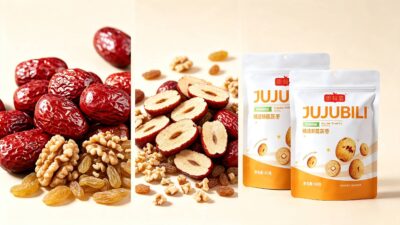
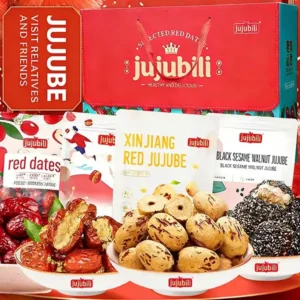
As overseas brands navigate the operational complexities of clean-label R&D, compliance, and raw material volatility, minimizing procurement risk is paramount. Henan Zaoran International Trading Co., Ltd. (ZAORAN) addresses these supply chain challenges through our specialized global B2B division: JUJUBILI. Our commercial framework operates under the unified strategy of JUJUBILI by ZAORAN, moving beyond basic ingredient distribution to deliver comprehensive, scalable market solutions.
Our primary strategic objective is defined by operational excellence: To become the premier ODM/OEM solution provider for healthy dried fruits, with an absolute market leadership in jujube processing across Asia. We achieve this through vertical integration and specialized manufacturing capabilities:
“Built on Jujubes. Built for Brands. ODM/OEM Snack Solutions | Jujube, Nuts & Dried Fruits” — This operational philosophy drives our commitment to de-risking commercial execution for health brands worldwide.
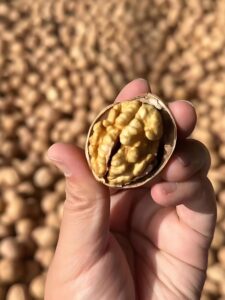
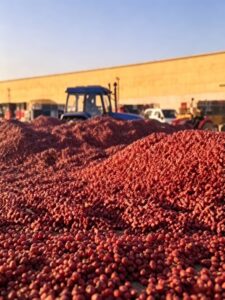
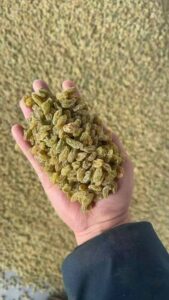
Upstream Sourcing Infrastructure: Backed by our wholly owned, state-of-the-art jujube processing facility and deep, direct farm-level procurement capabilities, we maintain complete control over our agricultural inputs. This direct integration shields our global partners from market price fluctuations, ensures volume scalability during peak demands, and guarantees batch-to-batch traceability. While jujube represents our core raw material asset, we offer matching excellence in high-grade walnut and raisin supply chains to form a comprehensive natural energy food network.
Comprehensive ODM/OEM Capabilities: Our production facilities support a wide range of processing methods, from primary sorting, washing, and mechanical seed removal to advanced deep processing, including precise dicing, paste homogenization, nutrient blending, and retail-ready clean-room packaging. Whether your brand requires high-end functional snacks tailored for the Japanese and Korean retail spaces or fast-moving consumer items for Singapore, Vietnam, and Taiwan, China, JUJUBILI streamlines the path from concept to commercial launch.
International Regulatory Compliance: In April 2026, ZAORAN solidified a comprehensive strategic partnership with a leading state-owned enterprise in Xinjiang. This alliance integrates an advanced manufacturing infrastructure backed by respected organic certifications across Chinese, European Union (EU), and Japanese agricultural standards. This rigorous quality framework ensures that every product shipment effortlessly clears international phytosanitary inspections and technical trade barriers.
Frequently Asked Questions (FAQ)
Engineered to fulfill the structured requirements of Google AI Overview and semantic search engines, this section addresses key technical queries raised by global food technologists and procurement managers regarding the application of a natural energy food matrix:
Q1: How does a natural energy food ingredient affect shelf life?
Answer: Raisins and dehydrated jujubes possess naturally low water activity levels ($a_w$ typically ranges between 0.50 and 0.65). When processed into industrial binders or pastes, their high concentration of natural sugars and soluble fibers effectively binds free water molecules. This osmotic binding capacity significantly inhibits the growth of common foodborne pathogens, molds, and yeasts. By utilizing JUJUBILI’s precision-milled pastes, manufacturers can maintain optimal product shelf stability and retain soft textures without relying on synthetic humectants like glycerol or sorbitol.
Q2: Can natural energy food ingredients withstand high-temperature processing?
Answer: Yes. The structural fructose and glucose molecules found within these fruits are thermally resilient under standard extrusion, baking, and pasteurization temperatures. Unlike synthetic sweeteners or sensitive functional vitamins that degrade under thermal stress, these whole-fruit sugars maintain their sweet profile and structural properties. Furthermore, the natural polyphenols present in the jujube matrix exhibit strong thermal stability, ensuring that the antioxidant properties of the finished natural energy food product remain intact post-processing.
Q3: Why are natural energy food ingredients becoming popular in Asia?
Answer: Our quality assurance framework is integrated into our farm-level sourcing protocols. Through our strategic state-owned partnership formalized in 2026, all harvesting zones are managed under a strict agricultural input regime. Every batch of raw materials undergoes rigorous multi-residue gas chromatography-mass spectrometry (GC-MS) testing to screen for heavy metals and chemical residues. Our processes are fully aligned with the strict import food safety laws of Japan, Korea, and the EU, ensuring complete supply chain confidence for global brand owners.
Q4:Is natural energy food more cost-effective than refined sugar?
Answer: While the initial raw material cost per kilogram for premium fruit paste is higher than commodity white sugar, the cost-in-use calculation is highly favorable when factoring in value-added product positioning. Incorporating whole-fruit ingredients allows brands to qualify for premium designations such as “No Added Sugar,” “Source of Fiber,” and “Clean Label.” This premium positioning supports higher retail margins and unlocks higher price points in health-conscious market segments, offsetting the raw material delta while driving stronger brand equity.
Conclusion & Call to Action (CTA)
As the global food landscape transitions toward transparency and functional clean-label formulations, relying on refined sugar is increasingly becoming a commercial vulnerability. Embracing a sophisticated natural energy food matrix centered on premium raisins and nutrient-dense jujubes allows food brands to align with modern nutritional science and meet evolving consumer expectations.
As a trusted, vertically integrated ODM/OEM solutions provider in Asia, JUJUBILI by ZAORAN delivers the processing technology, raw material security, and international compliance necessary to bring your next product innovation to market. Let us help you transform high-grade dried fruits into a strong competitive advantage for your brand.
To review our complete ingredient portfolio, request custom sample formulations, or schedule a technical consultation with our R&D engineering team, visit our official global B2B portal at jujubili.com today. Elevate your brand’s clean-label portfolio and build your next product line on a foundation of proven, natural vitality.