Blog
Jujube Quality Control: 6 Key Factors Every Buyer Should Check

For global food brands and retailers, sourcing the perfect red date ingredient is more than just finding a low price; it is about ensuring food safety, nutritional integrity, and supply chain transparency. As the demand for functional “superfoods” surges in markets like Vietnam, South Korea, Japan, and Singapore, understanding jujube quality control has become a critical skill for procurement managers.
In this comprehensive guide, we break down the essential quality benchmarks every Jujube Wholesale buyer must verify, from orchard-level management to advanced ODM/OEM snack solutions.
Physical Attributes: More Than Just Appearance
The first step in jujube quality control is a rigorous physical assessment. While many associate “size” with quality, professional buyers look for consistency and structural integrity.Ensuring high jujube quality control standards is essential for food safety and nutritional integrity.
Size and Grading
In the industry, Chinese jujubes (red dates) are typically graded by size. Premium grades (Super Grade or Grade A) usually feature fruits larger than 3.5cm – 4.5cm. However, for a Jujube Manufacturer focusing on snacks, uniformity is more important than sheer size to ensure consistent moisture loss during the drying process.To guarantee optimal jujube quality, it’s crucial to follow strict quality control guidelines.
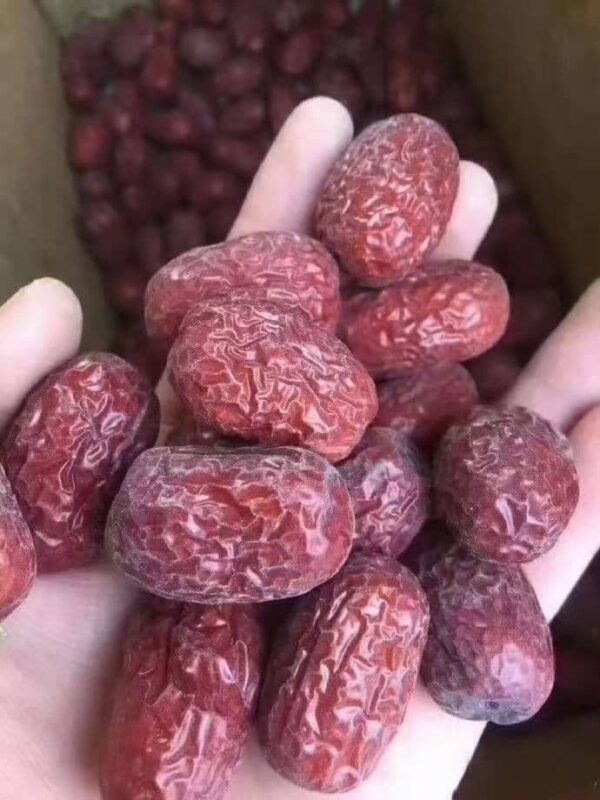
Skin Texture and Color
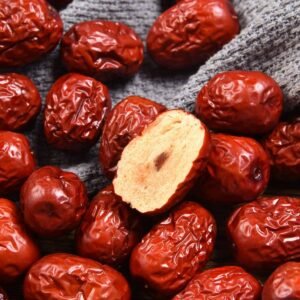
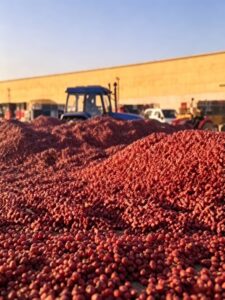
- Color: A high-quality red date should have a deep, uniform ruby or burgundy hue. A dull, brownish color may indicate over-ripening or poor storage.
- Skin: Look for “tight” skin with natural wrinkles. If the skin is excessively cracked, it may lead to microbial contamination during the washing phase.
Flesh Density and Pit-to-Meat Ratio
A premium Red Dates Ingredient should have thick, spongy flesh with a small, narrow pit. When squeezed, the fruit should spring back slightly, indicating optimal moisture content (typically between 15% and 25% for dried varieties).
Chemical and Safety Standards: The E-E-A-T Framework
For buyers in Japan or the EU, safety isn’t just a preference—it’s a legal mandate. At JUJUBILI by ZAORAN, we focus on three key pillars of safety to lower decision-making costs for our partners.
These include:
Traceability: From orchard to final product, ensuring transparency and accountability.
Due to the drying process, jujubes are susceptible to Aflatoxins if the humidity is not controlled. Quality control must include testing for:
Aflatoxin B1, B2, G1, G2.
Lead (Pb) and Cadmium (Cd) levels, ensuring they fall within international food safety limits.
Industry Note: In April 2026, ZAORAN entered a strategic partnership with a leading state-owned enterprise in Xinjiang. This collaboration ensures our raw materials meet China, EU, and Japanese organic standards, providing a “green lane” for brands targeting high-end international markets.
Pesticide Residue Management: Ensuring compliance with international standards.
Heavy Metal and Mycotoxin Testing: Protecting consumers with stringent safety protocols.
The Sourcing Advantage: Why Origin Matters
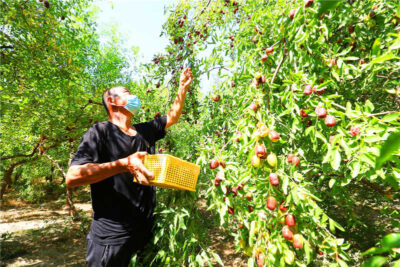
Not all red dates are created equal. The geographical origin—specifically the Terroir—dictates the nutritional profile.
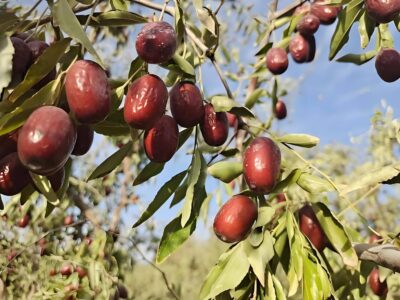
The geographical origin—specifically the Terroir—dictates the nutritional profile. At JUJUBILI by ZAORAN, we prioritize Xinjiang-sourced fruits for their higher concentration of Cyclic Adenosine Monophosphate (cAMP) and Vitamin C, produced by extreme temperature fluctuations and long sunlight hours.
| Region | Characteristic | Best For |
| Xinjiang (Aksu/Hotan) | High sugar, thick flesh, crisp skin | Premium snacks, Gift boxes |
| Hebei/Henan | Moderate sweetness, firm texture | Slicing, Tea ingredients |
As a Jujube Manufacturer, we prioritize Xinjiang-sourced fruits because the extreme temperature fluctuations and long sunlight hours produce a higher concentration of Cyclic Adenosine Monophosphate (cAMP) and Vitamin C.
Processing Quality: Evaluating the Manufacturer
When sourcing ODM/OEM Snack Solutions, the quality of the factory is just as important as the fruit itself. Here is what to audit:Cleaning and Sterilization: Does the supplier use multi-stage washing and advanced sterilization methods like Ozone or UV light to ensure microbial safety without chemical residues?
Cleaning and Sterilization
Does the supplier use multi-stage washing? At JUJUBILI, we employ:
- Bubble Washing: To remove surface dust.
- Brushing: To clean the deep wrinkles of the skin.
- Ozone/UV Sterilization: To ensure microbial safety without chemical residues.
Pitting and Slicing Precision
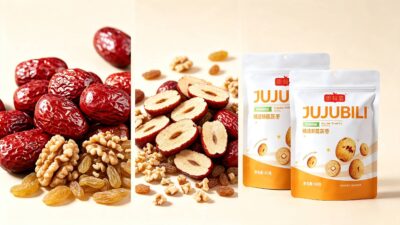
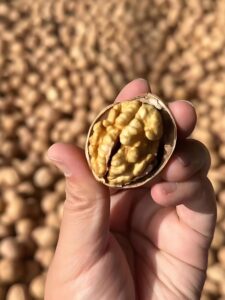
For “Jujube with Walnut” or “Crispy Jujube Slices,” the precision of the pitting process is vital. Residual pit fragments are a major “choke hazard” liability for brands. High-quality Jujube Quality Control involves X-ray or optical sorting machines to detect and remove fragmented stones.
Beyond the Fruit: Strategic ODM/OEM Solutions
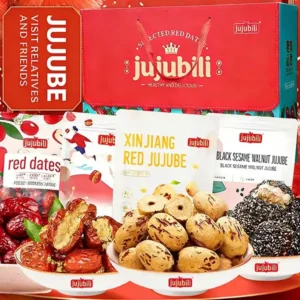
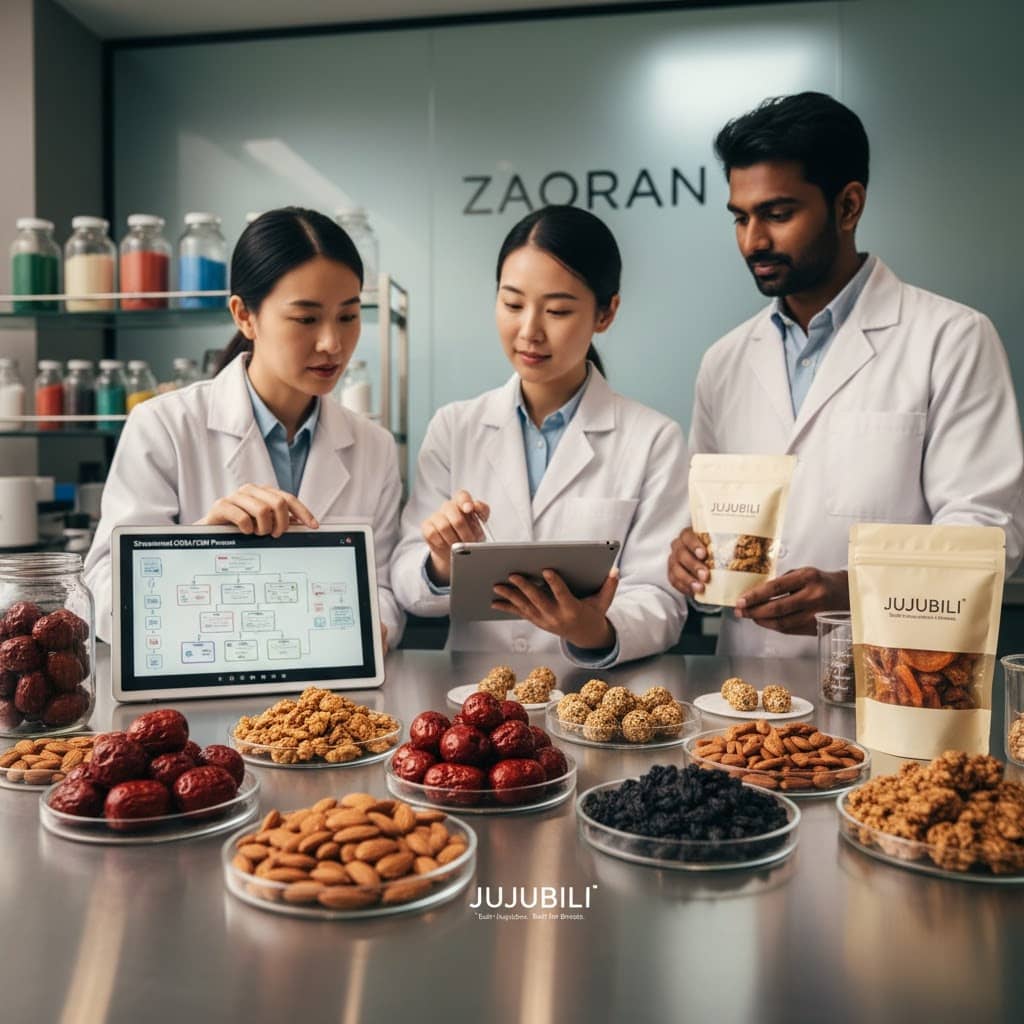
Today’s market—especially in South Korea and Taiwan—is shifting toward “Functional Snacks.” JUJUBILI by ZAORAN offers not just raw fruits but fully integrated ODM/OEM solutions, including Recipe Development, Texture Engineering, and Packaging Compliance for international markets.
JUJUBILI by ZAORAN specializes in lowering your “market entry cost” through:
- Recipe Development: Combining jujubes with nuts (walnuts, almonds) or raisins for balanced nutrition.
- Texture Engineering: Vacuum frying vs. Low-temperature dehydration for different “crunch” profiles.
- Packaging Compliance: Ensuring labels meet the specific regulatory requirements of the target country (e.g., Singapore’s Nutri-Grade).
How to Verify a Chinese Jujube Supplier
Before signing a Jujube Wholesale contract, perform these three checks:
- Traceability: Can the supplier trace the batch back to a specific orchard in Xinjiang?
- Certifications: Beyond ISO/HACCP, do they hold organic certifications recognized by your local government (EU Organic, JAS, etc.)?
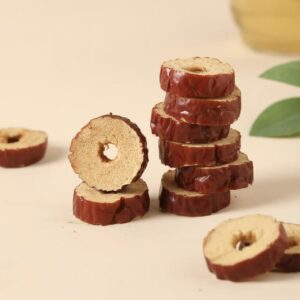
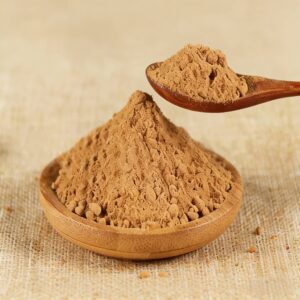
- R&D Capability: Ask for a custom sample of a “Deep-Processed” product. A true Jujube Manufacturer will have the equipment to handle powdering, slicing, and stuffing.
Conclusion: Built on Jujubes. Built for Brands.
Choosing the right partner in the red date industry requires a balance of raw material dominance and manufacturing sophistication. At ZAORAN, we believe that quality control is the foundation of trust. By integrating Xinjiang’s superior raw materials with our advanced processing capabilities, we provide more than just dried fruit—we provide a competitive edge for your brand.
Whether you are looking for a reliable Red Date Ingredient for your production line or a turnkey ODM/OEM Snack Solution, JUJUBILI is ready to help you navigate the complexities of the Asian healthy snack market.
Ready to elevate your product line? Visit jujubili.com to explore our latest lab results and product catalog.