Blog
Xinjiang Raisins: Nature’s Green Treasure from the Silk Road

A Millennium-Legacy Fruit Treasure
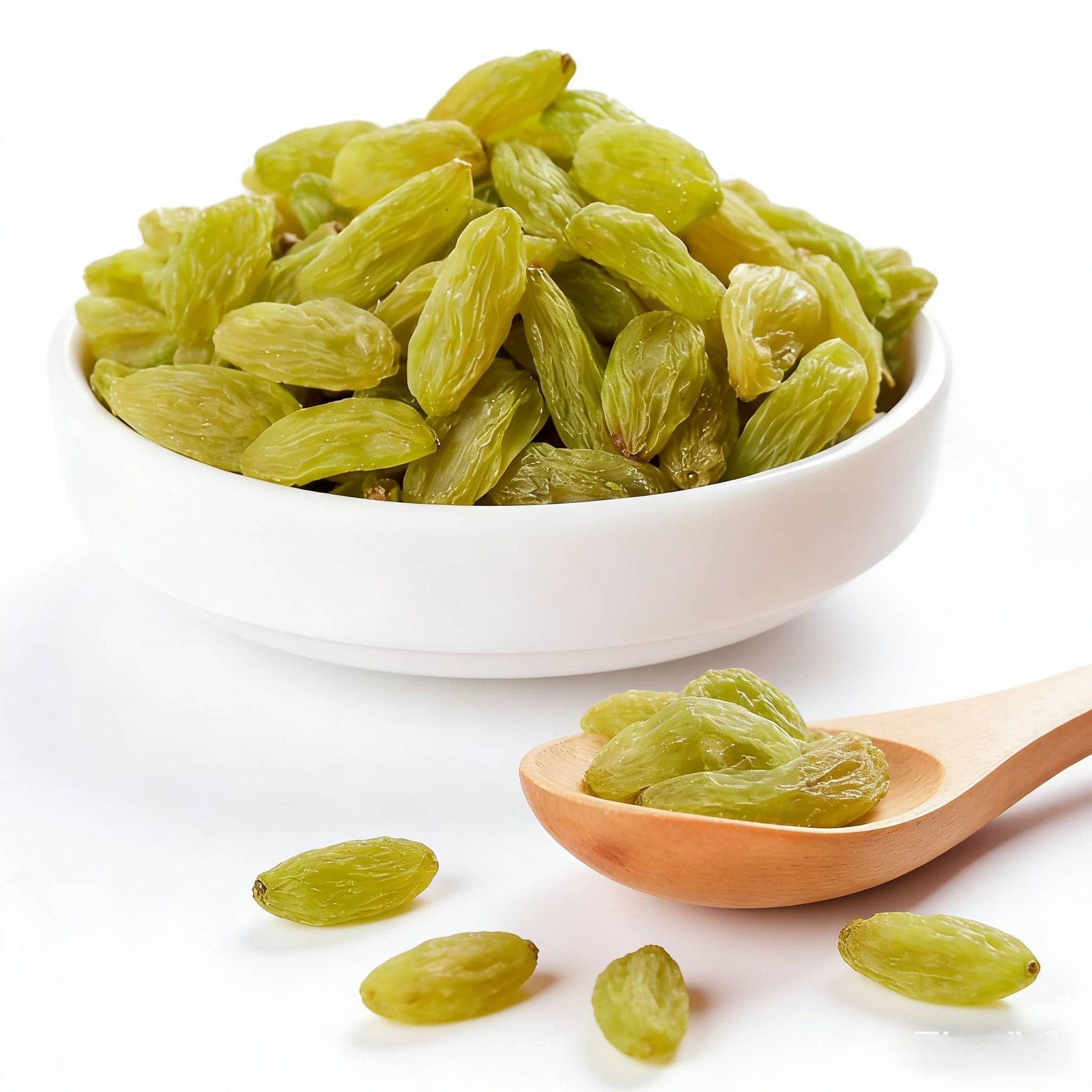
Xinjiang raisins, especially the seedless white raisins acclaimed as “Green Pearls,” carry a cultivation history of over a thousand years. Historical records indicate that as early as the 6th century during the Southern Dynasties, the Gaochang Kingdom in present-day Turpan region presented raisins to Emperor Wu of Liang as tribute. The discovery of raisin specimens in Tang Dynasty tombs provides archaeological evidence for this long history.
As China’s only green raisin production area, the Xinjiang Turpan Basin, with its unique natural conditions and traditional skills accumulated by Uygur farmers, produces raisins renowned for their “four excellence” in color, aroma, taste, and shape, famous both domestically and internationally. Today, Turpan has become the largest raisin production area in China, accounting for over 40% of the country’s total output, with about 5,000 tons of green raisins annually exported to international markets such as Japan and Southeast Asia.
Unique Growing Environment
The Turpan Basin is an ideal place for grape growth due to its unique geographical and climatic conditions. The area features low-lying terrain, high temperatures, little rainfall, abundant sunshine, and significant day-night temperature differences.
Ample daylight facilitates sugar accumulation through photosynthesis, while significant night-time temperature differentials help reduce respiratory consumption, thereby increasing fruit sugar content. The arid climate with minimal rainfall reduces pest and disease occurrence, with irrigation primarily relying on Tianshan mountain snowmelt. This dry environment also facilitates natural wind-drying processes, contributing to the exceptional quality of the raisins. Currently, Turpan City’s grape planting area has reached 632,800 mu (about 42,187 hectares) with over 550 varieties, accounting for about 40% of Xinjiang’s total grape production.
Unique Production Process
Traditional Shade-Drying Method
Xinjiang raisin production primarily falls into three categories: shade-drying natural wind drying, sun exposure, and rapid drying methods. The most renowned is the shade-drying method—a processing method unique to the Turpan Basin. Shade houses are mostly built on rooftops or hillsides, constructed with adobe bricks and featuring ventilation holes on all four walls.
Mature seedless white grapes are hung on wooden racks inside the house, and under the blowing of dry hot air, after 30-45 days of natural shade drying, they become green, pearl-like, soft-textured, and sweet raisins. This method effectively reduces discoloration and nutrient loss, maintaining the raisin’s color and soft texture. Generally, about 4 kg of fresh grapes are needed to produce 1 kg of raisins.
Modern Processing Technology
In 1977, the Xinjiang Academy of Agricultural Sciences Horticulture Research Institute developed rapid cold immersion drying technology, which reduces drying time by three-quarters to four-fifths through dehydrating agent treatment. Additionally, in 1982, the Xinjiang Academy of Agricultural Sciences Applied Atomic Energy Research Institute successfully applied cobalt-60 radiation technology, enabling raisins to maintain their color, aroma, taste, shape, and nutritional components unchanged after 113 days of storage at room temperature, with an integrity rate of 100%.
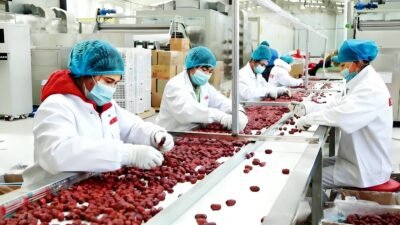
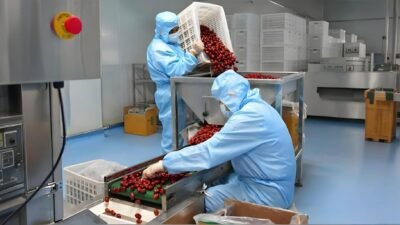
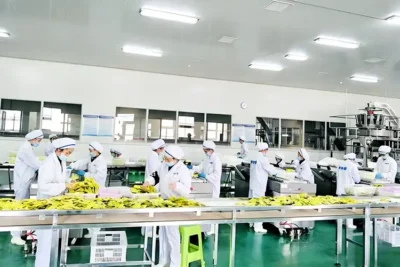
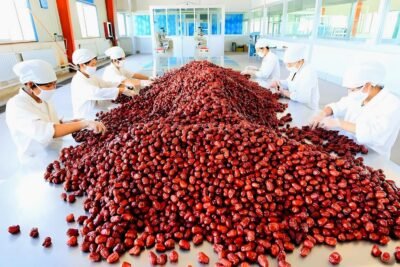
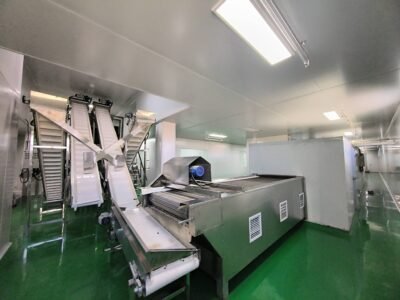
In recent years, some enterprises in Turpan have introduced AI intelligent sorting equipment and established 100,000-class purification workshops, achieving modernization and upgrading in raisin refining and processing.
Rich Nutritional Value and Health Benefits
Raisins are not only delicious but also a nutritious healthy food. According to measurements, per 100 grams of raisins contain 83.4g of carbohydrates, 2.5g of protein, 1.6g of dietary fiber, 9.1mg of iron, and 52mg of calcium.
The iron and calcium content in raisins are quite rich, making them a nourishing product for children, women, and those who are anemic or physically weak. The large amount of glucose contained therein has a nourishing effect on the myocardium, aiding in the recovery of patients with coronary heart disease. Studies have shown that raisins can also lower cholesterol, prevent thrombosis, and reduce the risk of cardiovascular diseases.
Recent research has also proven that resveratrol in raisins can effectively prevent cell canceration or inhibit the growth of malignant tumors, showing certain cancer-preventive effects. It should be noted that diabetics should avoid eating raisins, and obese people should not consume them in excess.
Modern Industry Development and Innovation
Xinjiang’s grape industry is transitioning toward a full-industry-chain model of development. Turpan City has formed a clusterized and chained development model including fresh grape sales, raisin processing, wine brewing, grape seed oil pressing, wine lees face masks, grape leaf processing, and diversified uses of grape branches.
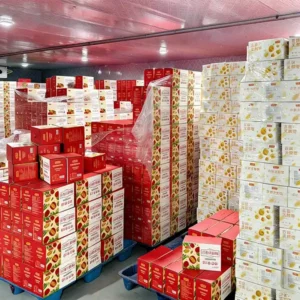
In terms of sales channels, besides traditional wholesale markets, Xinjiang raisins are also reaching the whole country through e-commerce platforms and live streaming commerce. For example, Gulahema Town in Qira County has expanded its sales range by establishing diversified sales channels and actively cooperating with major fruit wholesalers and supermarkets, while also leveraging e-commerce platforms.
The Xinjiang raisin industry is developing toward standardization and branding. Turpan City has promoted the construction of 340,000 mu (about 22,667 hectares) of standardized production demonstration bases and implemented vine training system transformation on over 210,000 mu (about 14,000 hectares). These measures not only improve the quality of raisins but also bring considerable economic benefits to local farmers, with per capita income reaching 23,000 yuan in some areas.
As a “sweet crystal” inherited from the Silk Road, Xinjiang raisins are not just a food product but also a carrier of Xinjiang’s culture. With their unique flavor and rich nutritional value, they continue to convey this green gift from the Tianshan Mountains to the world.